
Dodge County Criminal Docket Searches
Nebraska runs one central tool for criminal docket searches across the state. The Nebraska JUSTICE One-Time Case Search pulls both county and district criminal cases. A case number gets you there fastest. No number? Enter a full party name. Then filter by county, court, case type, year, judge, or attorney as details allow. Be careful with name matches alone, since two people can share one. Check the court, county, party role, and case type before you trust a result.
The name route costs money. The rate is $17 starting January 1, 2026. That fee applies even if nothing comes back. You get at most 30 cases, viewable for three calendar days. New filings can take about 24 hours to show up. For a hearing date, try the Multi-Court Case Calendar. It lists current and future settings. Confirm anything shaky with the court itself.
- Choose Dodge County Court for misdemeanors, traffic, ordinance complaints, and felony preliminary proceedings. Choose Dodge District Court for a felony after bind-over.
- Gather the case number if available. Otherwise retain the full party name, approximate year, court, and case type from a notice or other known court material.
- Open the official JUSTICE search, accept its terms, and add filters only when a broad name search needs narrowing.
- Compare the result details, then read the Register of Actions from the earliest entry forward and check the latest setting.
- Ask the proper clerk for a public copy or certified copy when the docket entry alone does not supply the needed document.
The Judicial Branch's criminal self-help material lays out how a criminal case moves from charge to finish. Those steps are the key to reading a Dodge County criminal docket.
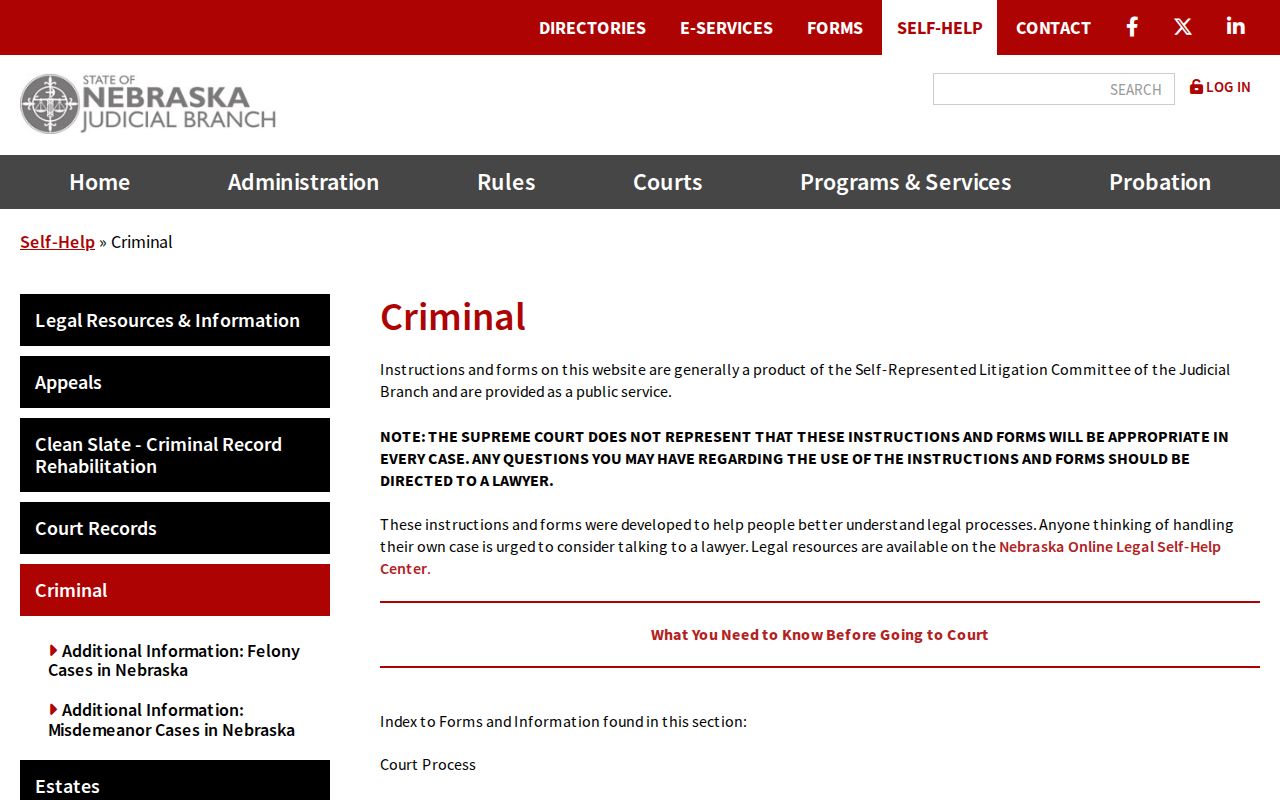
That official resource helps separate procedure from the case-specific wording in a docket entry.
Dodge County Criminal JUSTICE Fields
JUSTICE layers a criminal record into tabs. Each tab answers a different question. Case Detail gives you the broad strokes of the case. Parties lists who was entered in it. Attorneys and their roles appear there too, when the clerk has them. Offense Information holds the criminal charge information the record makes public. Financial Information may display assessed amounts, payments, or balances. The underlying order or judgment still explains what an amount means.
The Register of Actions is the part people usually mean when they say docket. It is the chronological spine of the Dodge County criminal docket. Entries include a complaint, appearance, preliminary hearing, motion, order, setting, plea, trial, sentence, payment, warrant, or appeal. Judge Notes show up where they apply. Images sit behind separate links. Having one is not a promise that every docket event carries a public document.
- Register of Actions
- Nebraska’s dated sequence of recorded filings, hearings, orders, and other activity.
- Disposition
- The recorded resolution of a charge or case. Its exact meaning depends on the displayed entry and case context.
- Bind-over
- The movement of a felony from County Court preliminary proceedings toward District Court after probable cause is found.
Criminal Dockets: What They Show
Not every Dodge County criminal docket looks the same. Nebraska's case-information service can display Case Detail, parties, offense information, financial information, the Register of Actions, judge notes where they apply, and document images, and a given case may show more or fewer of these fields. The display records what the court entered, nothing more. A charge remains an allegation until the later docket record states a disposition. And a balance figure is never the text of a sentence.
| Case header | Court, county, case type, filing date, judge, and status. Dodge does not publish a safe public case-number format, so copy the identifier exactly rather than decoding it. |
|---|---|
| Parties and offense | Party roles, attorneys where entered, and criminal offense information available in the public record. |
| Settings | Dates and hearing information when entered. Later continuances or resets can change an earlier setting. |
| Register of Actions | The dated trail of filings, appearances, motions, orders, pleas, hearings, disposition, and later activity. |
| Images and financials | Public document images when available, plus cost, payment, judgment, or balance information where the record provides it. |
Dodge County Criminal Docket Path
A felony in Dodge County can show up in two court dockets. County Court takes the early stage, from the complaint through bond activity and preliminary-hearing settings. If the case binds over, District Court takes the rest. Its docket may carry the charging document, motions, trial settings, sentencing, and anything filed later.
A bind-over is procedural. It moves the case. It decides nothing about guilt or the final result. So the safe docket search runs both ways. County Court covers the early felony stage. District Court covers what comes after. The Nebraska District Court overview describes the general-jurisdiction role behind this split.
For the County Court side, turn to the official misdemeanor process information from the Nebraska courts. It lays out how those lower-court criminal cases run.
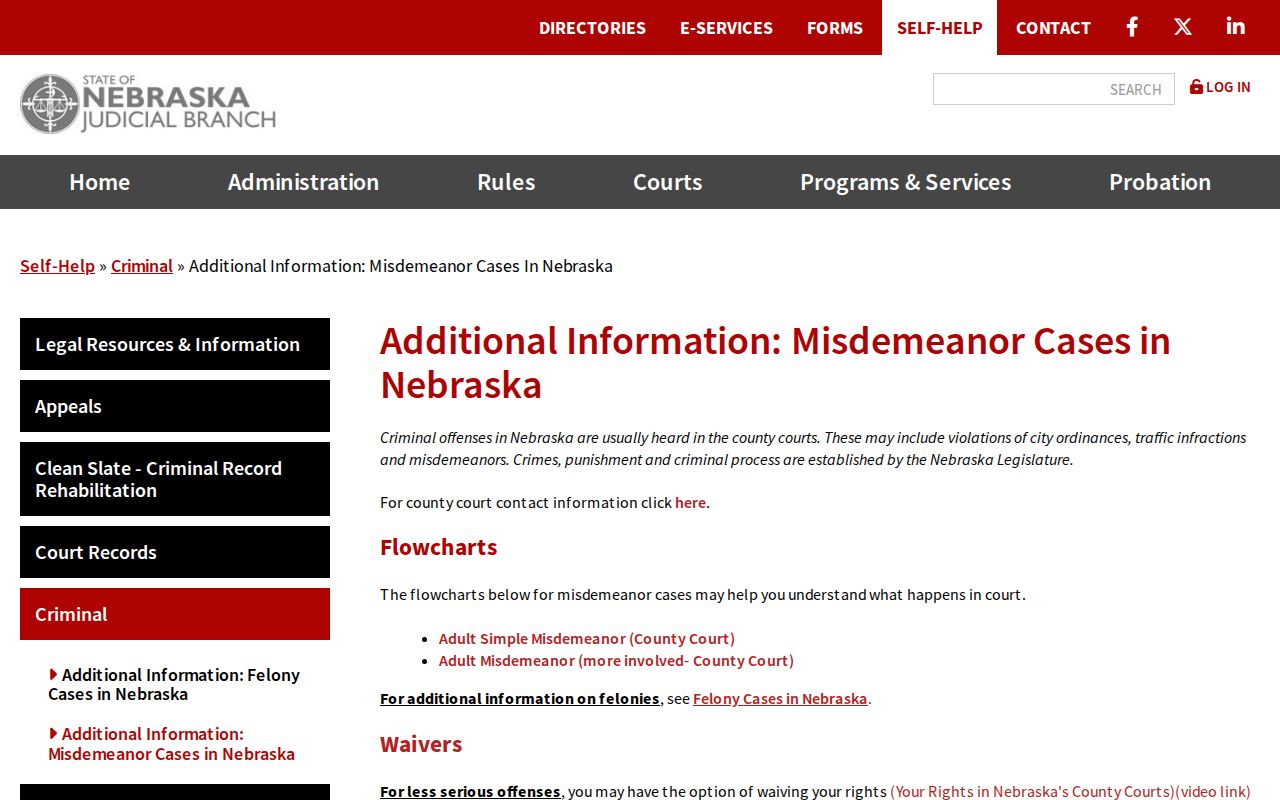
A docket entry follows a standard script. These descriptions explain what each event usually means, without guessing how things played out in any one Dodge County criminal docket.
Criminal Case Stages on the Docket
No two Dodge County criminal docket cases move through the same steps. At an appearance, the charge gets addressed. A plea of guilty, no contest, or not guilty can be entered. When the plea is not guilty, a trial setting usually comes later. Felonies add another stage. County Court may hold a preliminary hearing to test whether probable cause supports a bind-over to District Court. After that, expect motions, orders, continuances, payments, and appeal activity to fill out the docket.
Docket flow: Filing → Arraignment → Pretrial → Plea or Trial → Disposition → Sentencing
Always read the most recent clearly dated entry closely. A reset does not wipe the earlier setting from the Register of Actions. Likewise, a continuance is only a postponement, never a dismissal. No official Dodge code legend may explain a docket label. Keep the label exactly as displayed in that case.
Dodge County Criminal Hearing Checks
A preliminary hearing or other criminal setting can be hard to pin down. Start with the Register of Actions. Then search the Multi-Court Case Calendar by County Court or District Court. Use a date or last name. The calendar itself warns that its information may not be timely. A blank result does not prove no setting exists, so the newest court-confirmed information controls.
Need a live answer? Call the Dodge County Court criminal and traffic division at 402-727-2758. The main line is 402-727-2779. The Dodge County Court page names Marissa Miller as court clerk. Judith Wegner's office handles any District Court criminal record. That includes a felony after bind-over. Call 402-727-2780.
Dodge County Criminal Docket Courts
Dodge County Court keeps the criminal dockets for misdemeanors and traffic offenses. Municipal ordinance violations and preliminary felony proceedings land there too. Ordinance complaints from Fremont, Hooper, North Bend, Scribner, and other Dodge communities get filed there. Those cities run no separate municipal court dockets. Once a felony moves past its preliminary stage, the criminal docket sits in District Court.
Both offices sit in the Judicial Center at 428 N Broad St in Fremont. Each keeps its own docket route. Judith Wegner clerks for District Court. Marissa Miller clerks for County Court. Micki Gilfry, the county-government clerk, is a separate office and handles no court docket.
Neb. Rev. Stat. §25-2703 sets out the County Court route that municipal-ordinance complaints follow.
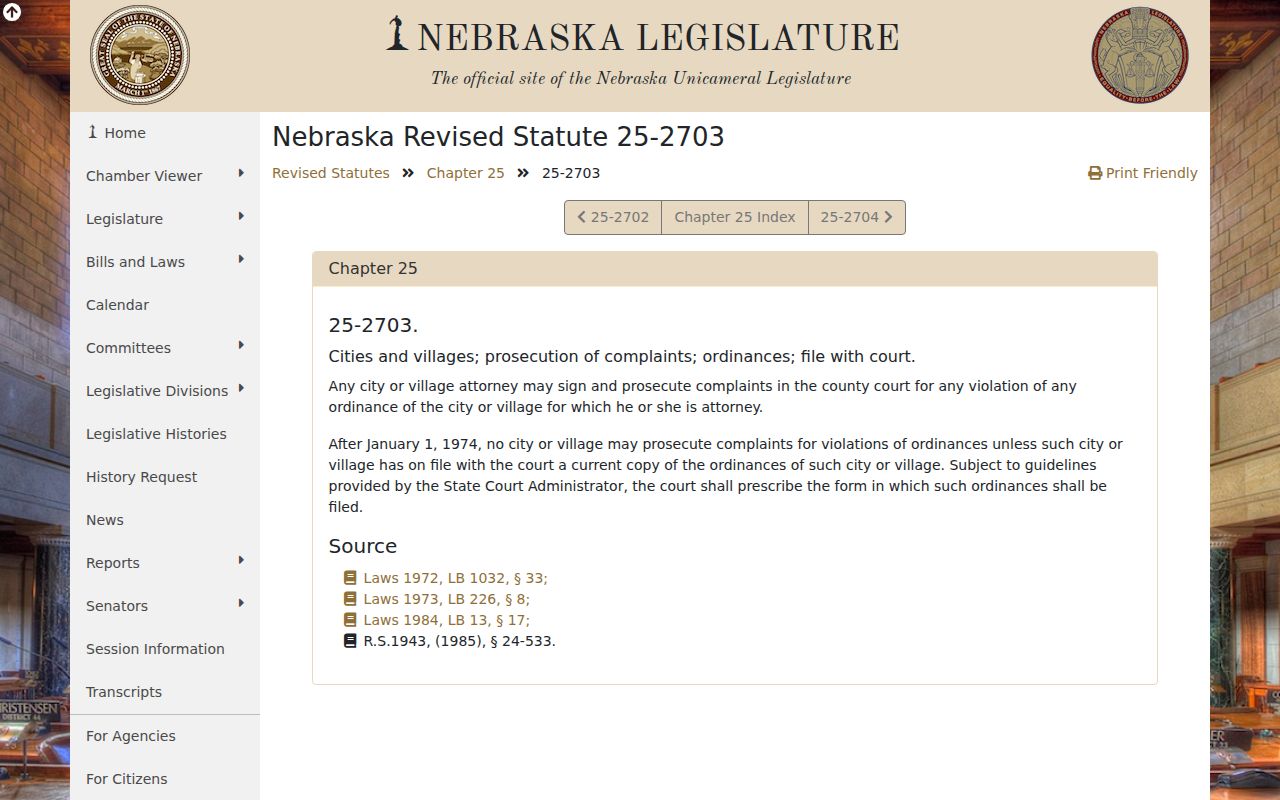
The statute points a Dodge ordinance case search toward County Court, not a city office.
Dodge County Criminal Docket Counts
Judicial Branch FY2025 reports offer docket context. They are not a headcount of people or a forecast of outcomes. The County Court report shows 371 felony entries for Dodge County during the reporting year. It also shows 1,871 misdemeanor entries. The District Court report lists 20 felony and 157 other-criminal entries. A felony count in the county figures can reflect preliminary-stage activity. The district numbers come from the separate general-jurisdiction docket instead.
These figures come from JUSTICE fiscal-year reporting. They do not identify unique individuals, establish case severity, or count hearings, so any docket search still begins with the specific court and record needed.
Access Rules for Criminal Dockets
Nebraska starts from open judicial proceedings. Even so, a public index does not make every criminal filing or image available online. A sealed order, protected information, redaction, or criminal-history restriction can narrow what a search returns. So can a separate confidentiality rule. Dodge County Court also handles most juvenile matters. Juvenile-file access remains distinct from an ordinary adult criminal docket.
Key rules:
Neb. Rev. Stat. §24-1001 states the general principle that judicial proceedings are open unless law provides otherwise.
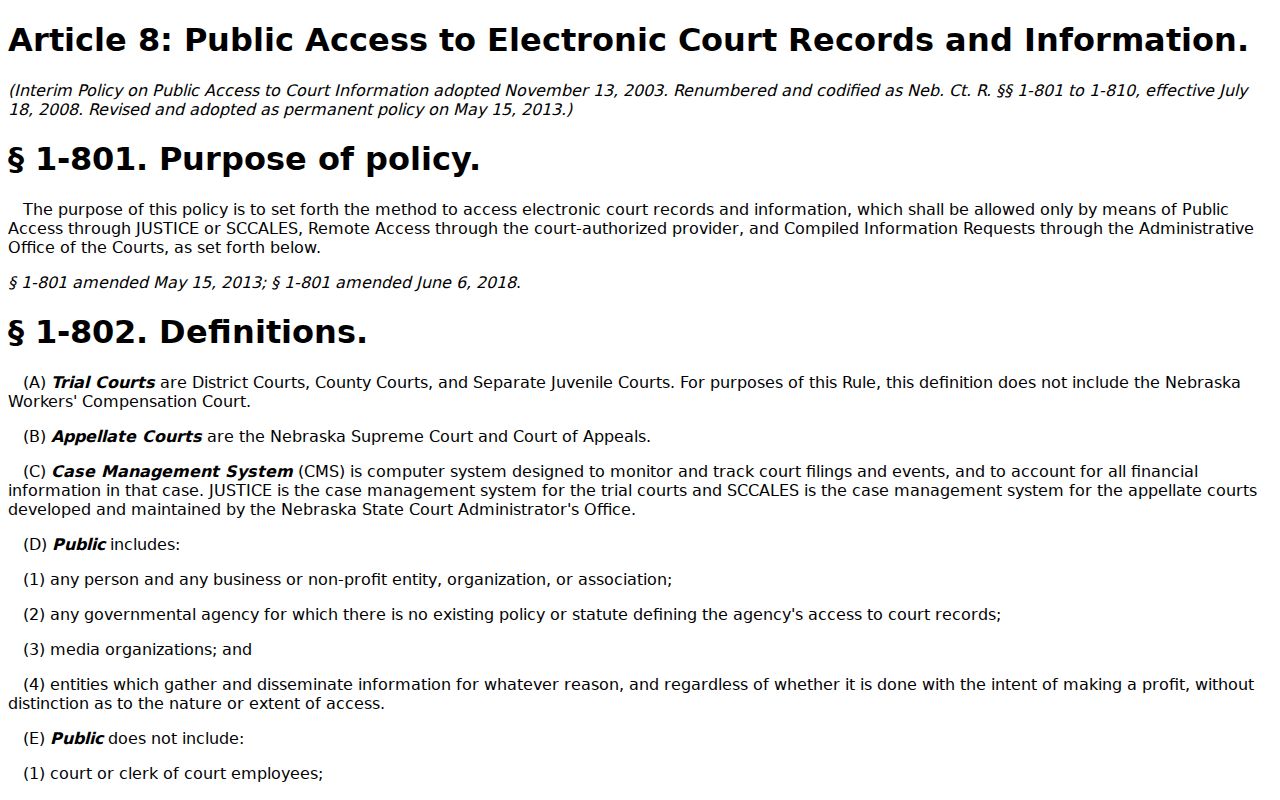
Neb. Ct. R. §1-808 identifies information excluded from public access, including sealed and adoption material.
Neb. Ct. R. §2-210 addresses protected information, redaction, confidential cover sheets, and document-specific sealing requests.
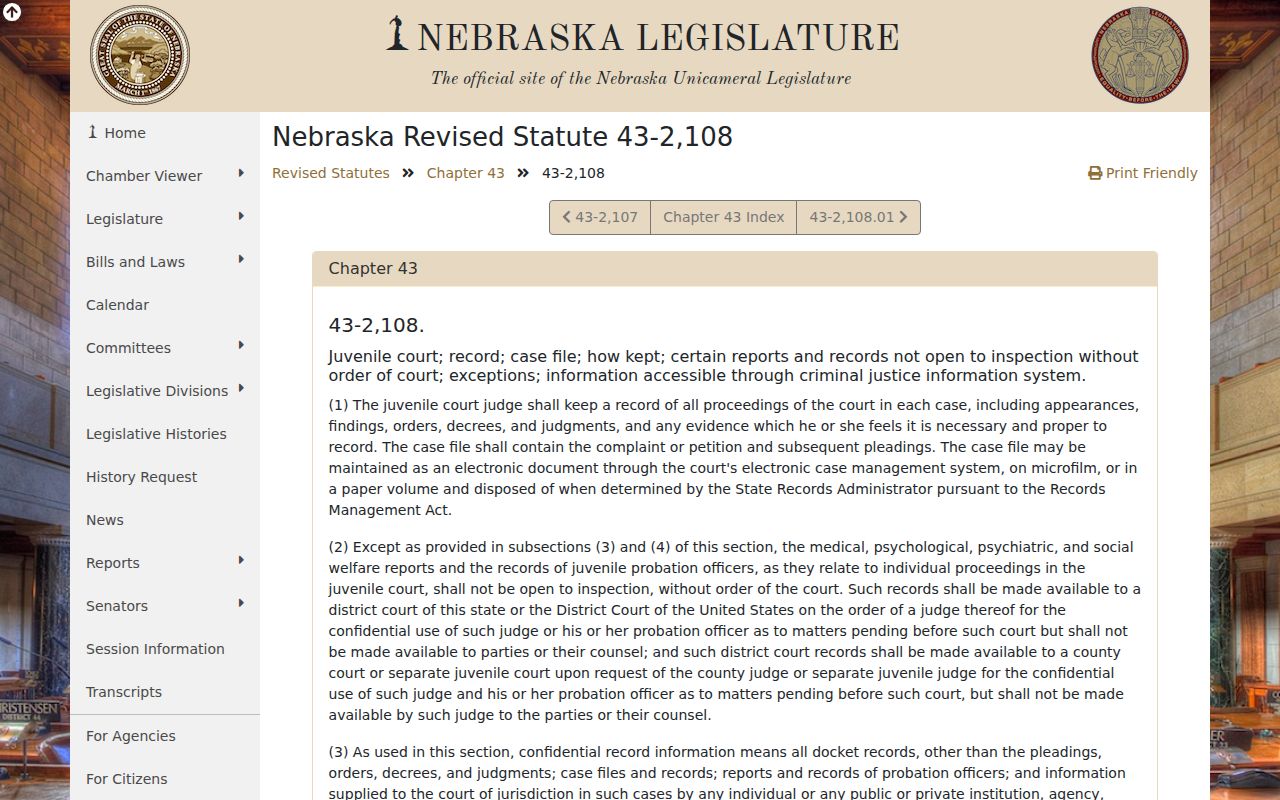
Neb. Rev. Stat. §43-2,108 supplies special confidentiality rules for juvenile files.
The Legislature’s open-proceedings statute is the starting point for the public-access principle.
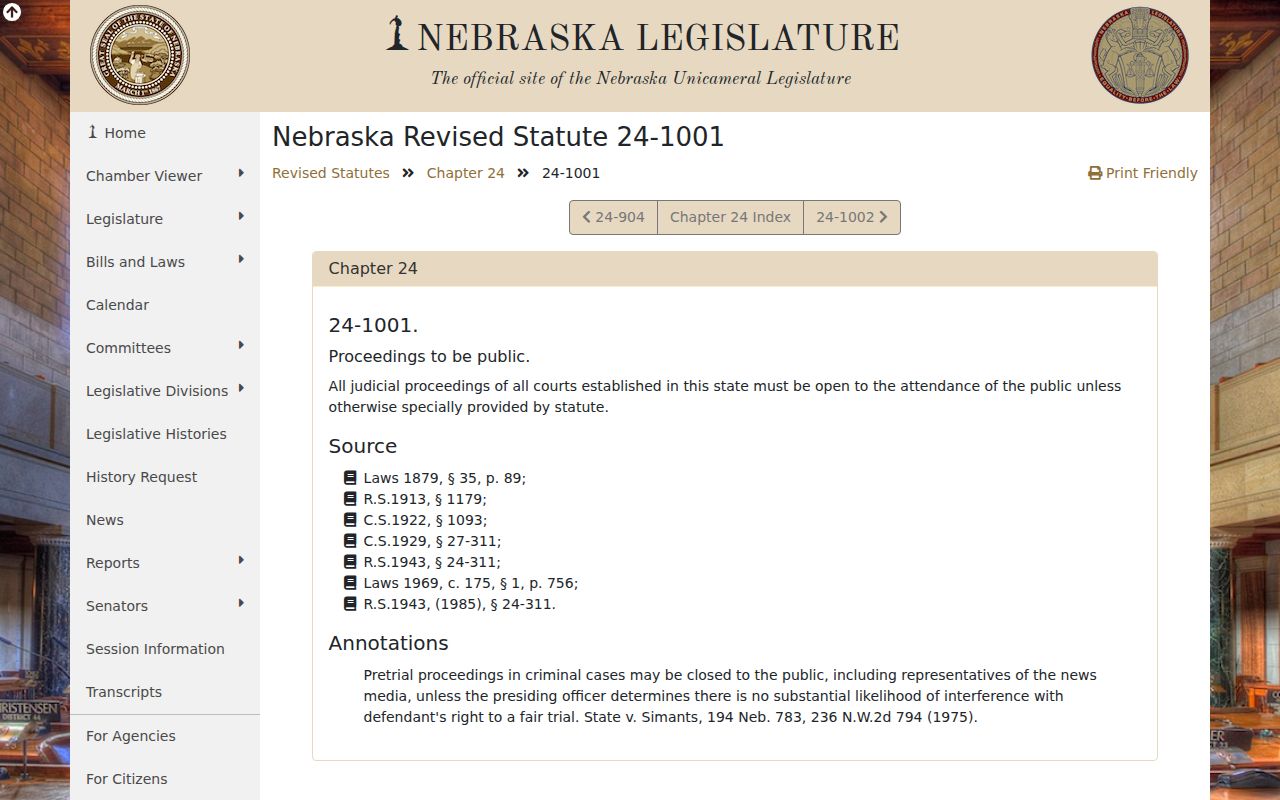
That general rule works alongside court rules and statutes protecting particular information. The Judicial Branch’s Rule §1-808 material explains where the public-access boundary sits for excluded information.
Treat a restricted result as an access limit. It is not proof that a case does not exist. The Legislature’s juvenile-file statute sets out the separate protections that apply to County Court juvenile matters.
Ask the right clerk about the cause when a record is missing or restricted. The answer may be a recent entry, a restriction, an unavailable image, the wrong court, or retention. Court staff do not provide or sign no-record certificates. The statewide records policy sets that limit.
Dodge County Criminal Docket Documents
Images and docket entries are different things. Nebraska makes an image available for a filed or uploaded document only when it is public. That applies only to items after April 16, 2008. An entry can appear with no image. An older filing may still exist outside the online image collection. A short Register of Actions label is not the full content of an order, complaint, or other filing. Never assume it is.
For a known public Dodge criminal case, the courthouse JUSTICE terminal is a fallback channel. The proper clerk is another. Ask for the item by case number. Copy, certification, and retention limits are worth raising at the same time. The public terminal supports searching by name or case number. Certified copies and images can carry charges. A clerk can quote the current total for a particular request.